A roadmap to deepen rights, leadership & inclusion.
Lamicare DRO Uganda's 2026–2030 direction builds on the mission we've held since day one — and sharpens it. Guided by dignity and justice, we're scaling programmes, deepening accountability, and ensuring persons with disabilities shape the decisions that affect their lives.
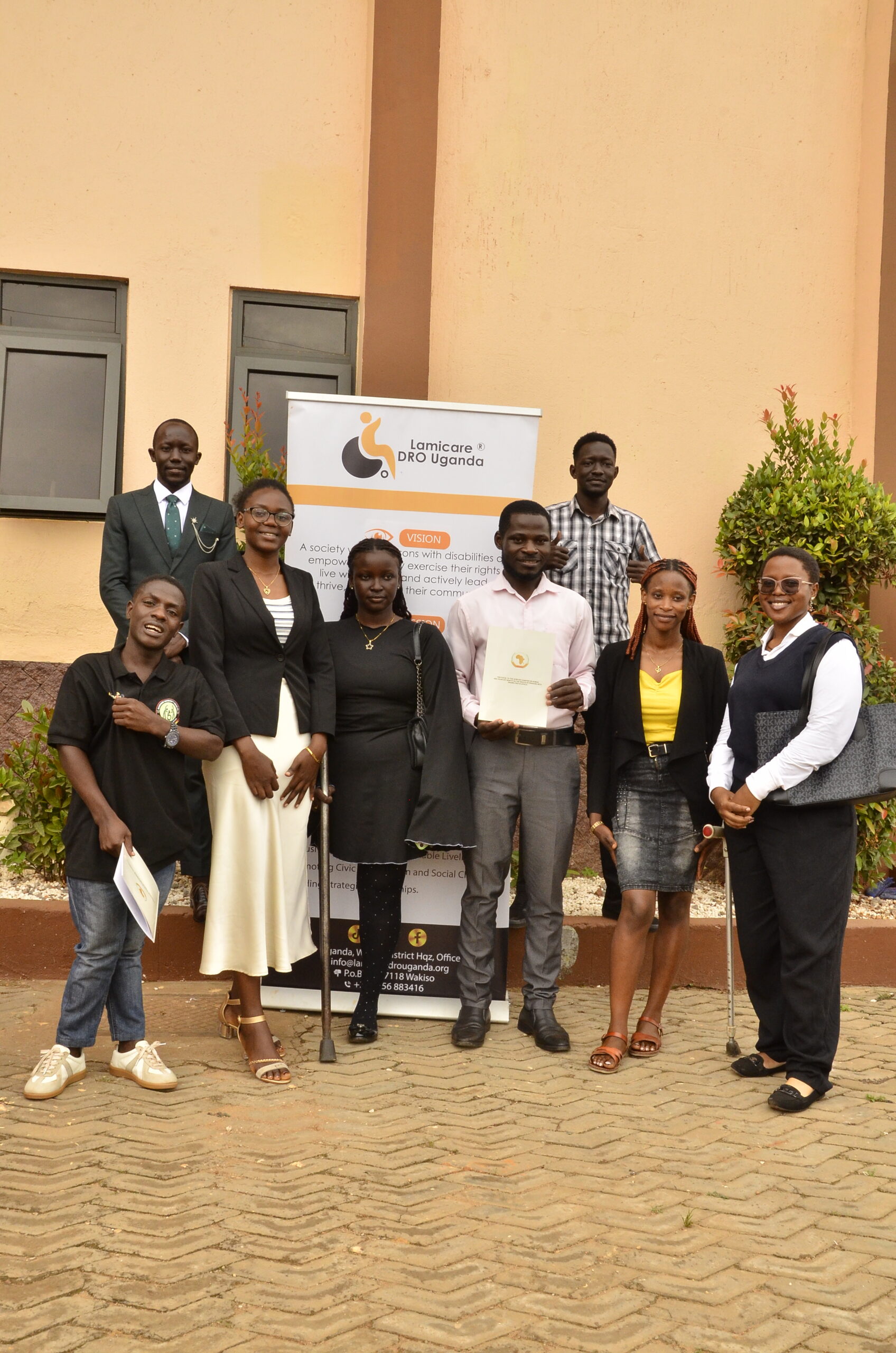
Why this direction. Why now.
Lamicare DRO Uganda's 2026–2030 direction builds on our mission — to uphold the dignity of persons with disabilities through robust advocacy, leadership development, inclusive education, sustainable livelihoods, civic participation and strategic partnerships.
It is rooted in community leadership — including strong representation of persons with disabilities on our Board — and aligned with Uganda's disability and inclusion frameworks, as well as the Sustainable Development Goals that advance equality, education, decent work and reduced inequalities.
This is not a rebrand. It is a deepening: sharper strategies, bolder targets, and more rigorous accountability to the persons with disabilities we exist to serve.
The plan, in five pillars.
Each pillar has a clear goal, specific interventions, and measurable targets. Click any to jump to its detail below.
The goal
Laws, policies and systems fully respect and realise the rights of persons with disabilities. We push for inclusive frameworks and challenge stigma through evidence-based advocacy.
What we'll do
- Champion full implementation of national and international disability frameworks.
- Engage government, civil society and institutions on inclusive policy design.
- Run evidence-based awareness campaigns that challenge stigma in communities, schools and media.
- Equip grassroots leaders with tools and platforms to influence local decisions.
Targets by 2030
The goal
Persons with disabilities lead and influence at community and institutional levels. We scale mentorship, leadership training and platforms for authentic representation.
What we'll do
- Run structured leadership cohorts for emerging leaders with disabilities.
- Connect leaders with experienced advocates through peer mentoring.
- Build skills in public speaking, governance, project management and advocacy.
- Support persons with disabilities into leadership and decision-making roles.
Targets by 2030
The goal
Equal access to learning and sustainable economic opportunity. We support inclusive education pathways and livelihood programmes that promote independence.
What we'll do
- Support inclusive schools, families and learning environments for children with disabilities.
- Deliver practical, market-relevant skills for employment and self-employment.
- Facilitate small grants, cooperatives and income-generating activities.
- Strengthen economic independence and household voice for persons with disabilities.
Targets by 2030
The goal
Meaningful participation in public life and collective action. We facilitate dialogue, civic platforms and community-driven change.
What we'll do
- Create safe community dialogue spaces for persons with disabilities and local leaders.
- Deliver civic education on rights, participation and accountability.
- Support grassroots movements and community-led campaigns.
- Ensure persons with disabilities shape public decisions at local and district levels.
Targets by 2030
The goal
A credible, accountable and well-resourced organisation. We deepen partnerships with government, civil society and donors, and strengthen governance, transparency and capacity.
What we'll do
- Deepen partnerships with government, civil society and international networks.
- Diversify funding and reduce reliance on single sources.
- Strengthen MEAL, safeguarding and disability-inclusive design across all programmes.
- Maintain rigorous accountability: independent audits, zero tolerance for corruption, robust data privacy.
Targets by 2030
What 2030 looks like.
By 2030 we aim to expand reach, deepen quality, and ensure persons with disabilities are recognised, valued and empowered to shape their communities.
Wider community impact
Programmes expanded across Wakiso and partner districts — so more persons with disabilities access advocacy support, skills and livelihoods.
Rights-based excellence
Strengthened MEAL, safeguarding and disability-inclusive design — so every intervention centres lived experience and delivers measurable change.
A resilient organisation
Diversified funding, growing partnerships, and rigorous accountability — so impact lasts beyond single projects.
How we'll stay accountable.
Ambitious strategies require rigorous accountability. These are the commitments that keep us honest.
Independent Audits
Our financial management is rigorous and subject to independent audits. Audited statements are published for public transparency.
Zero Tolerance
Robust policies on conflicts of interest, safeguarding and fraud. Zero tolerance for corruption at every level.
MEAL & Learning
Monitoring, evaluation, accountability and learning embedded across every programme — measured against the targets on this page.
Lived-Experience Governance
Significant representation of persons with disabilities on our Board — holding the organisation to the highest standard of inclusive practice.
Invest in this vision.
Partner with us to advance disability rights and inclusion through 2030 and beyond. Every contribution, partnership and voice strengthens the movement.